Cloud computing has transformed how businesses operate, and MS Azure stands at the forefront of this revolution. As Microsoft’s powerful cloud platform, MS Azure offers unmatched scalability, security, and integration for enterprises worldwide. Let’s dive into what makes it a game-changer.




What Is MS Azure and Why It Matters

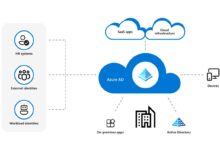
MS Azure, officially known as Microsoft Azure, is a comprehensive cloud computing platform launched by Microsoft in 2010. It provides over 200 services, including computing, analytics, storage, and networking, all accessible via the internet. Unlike traditional on-premise infrastructure, MS Azure enables organizations to scale resources on demand, reducing costs and increasing agility.
History and Evolution of MS Azure
MS Azure began as ‘Windows Azure’ in 2010, primarily focused on application hosting. Over the years, it evolved into a full-fledged cloud ecosystem. By 2014, Microsoft rebranded it to Microsoft Azure, signaling its expansion beyond Windows-based services to support Linux, open-source tools, and hybrid environments. Today, it’s the second-largest cloud provider globally, trailing only AWS but leading in enterprise integration.
- 2010: Launch as Windows Azure for PaaS (Platform as a Service).
- 2014: Rebranded to Microsoft Azure with expanded IaaS (Infrastructure as a Service) offerings.
- 2018: Azure surpasses $10 billion in annual revenue, showcasing rapid adoption.
- 2023: Over 95% of Fortune 500 companies use MS Azure for critical workloads.
“Azure is not just a cloud platform; it’s a strategic enabler for digital transformation.” — Satya Nadella, CEO of Microsoft
Core Components of MS Azure
MS Azure is built on a modular architecture, allowing users to pick and choose services based on their needs. The core components include:
- Compute: Virtual Machines, Azure Functions, and App Services for running applications.
- Storage: Blob, File, Queue, and Table storage for structured and unstructured data.
- Networking: Virtual Networks, Load Balancers, and Azure DNS for secure connectivity.
- Security & Identity: Azure Active Directory, Key Vault, and Security Center for protection.
These components work seamlessly together, enabling developers and IT teams to build, deploy, and manage applications efficiently. For more details, visit the official MS Azure website.
Key Benefits of Using MS Azure
Organizations choose MS Azure not just for its breadth of services, but for tangible business advantages. From cost savings to global reach, the platform delivers measurable value across industries.
Cost Efficiency and Pay-as-You-Go Model
One of the biggest advantages of MS Azure is its flexible pricing. Unlike traditional IT infrastructure that requires large upfront investments, MS Azure operates on a pay-as-you-go model. You only pay for the resources you consume—whether it’s compute time, storage, or bandwidth.
- No capital expenditure (CapEx) for servers or data centers.
- Reserved instances offer up to 72% discount for long-term usage.
- Free tier available for startups and developers to experiment.
This model is especially beneficial for small and medium businesses that need enterprise-grade infrastructure without the overhead. Azure Cost Management tools also help monitor and optimize spending in real time.
Global Reach and Data Center Presence
MS Azure operates in 60+ geographic regions worldwide, more than any other cloud provider. This global footprint ensures low-latency access and compliance with local data regulations.
- Regions span North America, Europe, Asia-Pacific, Middle East, Africa, and South America.
- Each region has multiple data centers for redundancy and high availability.
- Supports compliance with GDPR, HIPAA, ISO 27001, and other standards.
For multinational corporations, this means they can deploy applications close to their users, improving performance and meeting legal requirements. Learn more about Azure’s global infrastructure here.
MS Azure vs. Competitors: How It Stands Out
While AWS and Google Cloud are major players, MS Azure differentiates itself through integration, hybrid capabilities, and enterprise trust.
Integration with Microsoft Ecosystem
For organizations already using Microsoft products like Office 365, Dynamics 365, or Windows Server, MS Azure offers seamless integration. This reduces friction during migration and enhances productivity.
- Single sign-on (SSO) via Azure Active Directory across Microsoft apps.
- Direct connectivity between Azure and on-premise Exchange or SharePoint.
- Unified management through Microsoft Endpoint Manager.
This tight integration is a key reason why enterprises prefer MS Azure over competitors. It’s not just a cloud platform—it’s an extension of their existing IT environment.
Hybrid Cloud Leadership with Azure Stack
Unlike pure public cloud providers, MS Azure excels in hybrid scenarios. Azure Stack allows businesses to run Azure services on-premise, creating a consistent environment across cloud and data centers.
- Azure Stack HCI (Hyper-Converged Infrastructure) for virtualized workloads.
- Azure Stack Edge for edge computing with AI capabilities.
- Azure Arc extends management to any infrastructure, even non-Microsoft systems.
This flexibility is critical for industries like finance, healthcare, and government, where data sovereignty and latency are concerns. According to Gartner, Azure leads in hybrid cloud adoption due to these capabilities.
“Azure’s hybrid model bridges the gap between legacy systems and modern cloud innovation.” — Gartner Report, 2023
Core Services Offered by MS Azure
MS Azure’s service catalog is vast, but several core offerings form the backbone of most deployments.
Compute Services: Virtual Machines and Containers
Azure Virtual Machines (VMs) allow users to run Windows or Linux environments in the cloud. They support a wide range of workloads—from legacy applications to high-performance computing.
- Over 600 VM sizes optimized for CPU, memory, GPU, or storage.
- Support for custom images and third-party software.
- Integration with Azure Kubernetes Service (AKS) for container orchestration.
AKS simplifies the deployment and management of Kubernetes clusters, making it easier to adopt microservices architecture. Developers can deploy containers using DevOps pipelines directly from GitHub or Azure DevOps.
Storage Solutions: Scalable and Secure
MS Azure provides multiple storage options tailored to different needs:
- Blob Storage: Ideal for unstructured data like videos, images, and backups.
- File Storage: Fully managed file shares accessible via SMB or NFS.
- Disk Storage: High-performance SSDs for VMs with low-latency requirements.
- Data Lake Storage: Built for big data analytics with hierarchical namespace support.
All storage types include built-in redundancy (LRS, ZRS, GRS) and encryption at rest and in transit. Azure also offers tiered storage (Hot, Cool, Archive) to optimize costs based on data access frequency.
Networking and Connectivity
Azure Virtual Network (VNet) enables secure communication between cloud resources. It supports segmentation, routing, and firewall policies similar to on-premise networks.
- Azure ExpressRoute for private, high-speed connections to on-premise networks.
- Azure VPN Gateway for secure site-to-site or point-to-site tunnels.
- Azure Front Door and CDN for global content delivery and DDoS protection.
These networking tools ensure that applications remain available, fast, and protected from threats. For detailed documentation, visit Azure Networking Guide.
Security and Compliance in MS Azure
Security is a top priority for any cloud platform, and MS Azure invests heavily in protecting customer data.
Built-In Security Features
MS Azure provides a multi-layered security approach:
- Azure Defender: Advanced threat protection for servers, SQL, and storage.
- Azure Firewall: Managed, cloud-native firewall with FQDN filtering.
- Network Security Groups (NSGs): Control inbound and outbound traffic to VMs.
- DDoS Protection: Standard and Premium tiers to mitigate distributed attacks.
These tools are integrated into the Azure portal, allowing administrators to configure and monitor security policies from a single dashboard.
Identity and Access Management with Azure AD
Azure Active Directory (Azure AD) is the cornerstone of identity management in MS Azure. It supports:
- Multi-factor authentication (MFA) for enhanced login security.
- Conditional Access policies based on user location, device, or risk level.
- Single sign-on (SSO) for thousands of SaaS applications.
- Identity Protection to detect and respond to suspicious activities.
With over 1.2 billion identities managed globally, Azure AD is one of the most trusted identity platforms. It also integrates with on-premise Active Directory via Azure AD Connect.
“Identity is the new perimeter in cloud security.” — Microsoft Security Report
AI and Machine Learning Capabilities in MS Azure
MS Azure isn’t just about infrastructure—it’s a leader in artificial intelligence and machine learning.
Azure Cognitive Services
Azure Cognitive Services provide pre-built AI models that developers can integrate into applications without deep ML expertise.
- Computer Vision API for image analysis and object detection.
- Text Analytics for sentiment analysis and language detection.
- Speech Services for voice recognition and text-to-speech conversion.
- Face API for facial recognition and emotion detection.
These APIs are used in chatbots, accessibility tools, and customer service automation. For example, a retail app can use Computer Vision to recommend products based on uploaded photos.
Machine Learning with Azure ML Studio
Azure Machine Learning Studio is a fully managed environment for building, training, and deploying ML models.
- Drag-and-drop interface for no-code model development.
- Support for Python, R, and TensorFlow for advanced users.
- Automated ML (AutoML) to find the best algorithm and hyperparameters.
- Integration with MLOps for model versioning and monitoring.
Enterprises use Azure ML for predictive maintenance, fraud detection, and demand forecasting. The platform also supports responsible AI principles, ensuring fairness and transparency in models.
DevOps and Application Development on MS Azure
MS Azure empowers developers with tools to accelerate software delivery through DevOps practices.
Azure DevOps Services
Azure DevOps is a suite of tools covering the entire development lifecycle:
- Azure Repos: Git repositories for source control.
- Azure Pipelines: CI/CD (Continuous Integration/Continuous Deployment) for automated builds and releases.
- Azure Boards: Agile planning with backlogs, sprints, and Kanban boards.
- Azure Test Plans: Manual and exploratory testing tools.
- Azure Artifacts: Package management for NuGet, npm, and Maven.
Teams can connect Azure DevOps to GitHub, Jenkins, or Bitbucket, enabling hybrid workflows. Microsoft also offers GitHub Actions integration for seamless automation.
Serverless Computing with Azure Functions
Azure Functions enables event-driven, serverless computing. Developers write small pieces of code (functions) that run in response to triggers like HTTP requests, timers, or queue messages.
- No need to manage servers or scale infrastructure manually.
- Pay only when the function executes (per execution and memory used).
- Supports C#, JavaScript, Python, Java, and PowerShell.
- Integrates with Logic Apps for workflow automation.
This model is ideal for microservices, data processing, and backend APIs. For example, a function can resize images uploaded to Blob Storage automatically.
Real-World Use Cases of MS Azure
MS Azure powers a wide range of industries, from healthcare to manufacturing.
Healthcare: Secure Patient Data and Telemedicine
Hospitals and clinics use MS Azure to store electronic health records (EHR) securely while complying with HIPAA.
- Azure Health Data Services enables FHIR-based data exchange.
- AI-powered tools assist in medical imaging analysis.
- Teams integration supports telehealth consultations.
For instance, Mayo Clinic uses Azure to accelerate clinical research and improve patient outcomes through data analytics.
Manufacturing: Predictive Maintenance and IoT
Manufacturers leverage Azure IoT Hub and Azure Digital Twins to monitor equipment and optimize operations.
- Sensors collect real-time data from machines and send it to Azure.
- Machine learning models predict failures before they occur.
- Digital twins simulate physical assets for testing and optimization.
Siemens uses MS Azure to power its industrial IoT platform, reducing downtime and improving efficiency.
Financial Services: Fraud Detection and Risk Management
Banks and fintech companies use Azure’s AI and analytics tools to detect anomalies and manage risk.
- Real-time transaction monitoring with Azure Stream Analytics.
- Fraud detection models trained on historical data.
- Secure access controls for sensitive financial data.
JPMorgan Chase, for example, uses Azure to enhance its cybersecurity posture and accelerate cloud migration.
What is MS Azure?
MS Azure is Microsoft’s cloud computing platform that provides a wide range of services including computing, storage, networking, AI, and security. It allows businesses to build, deploy, and manage applications across a global network of data centers.
How does MS Azure compare to AWS?
While AWS has a larger market share, MS Azure excels in hybrid cloud integration, enterprise support, and seamless connectivity with Microsoft products like Office 365 and Active Directory. Azure is often preferred by organizations already invested in the Microsoft ecosystem.
Is MS Azure secure?
Yes, MS Azure is highly secure, offering built-in features like Azure Defender, Azure Firewall, and Azure AD. It complies with major standards such as GDPR, HIPAA, and ISO 27001, making it suitable for regulated industries.
Can I use MS Azure for machine learning?
Absolutely. MS Azure provides powerful tools like Azure Machine Learning Studio and Cognitive Services that enable developers and data scientists to build, train, and deploy AI models at scale.
What is the cost model of MS Azure?
MS Azure uses a pay-as-you-go pricing model, where you only pay for the resources you use. It also offers reserved instances for long-term savings and a free tier for beginners to explore its services.
MS Azure has firmly established itself as a leading cloud platform by combining robust infrastructure with intelligent services and enterprise-grade security. Whether you’re a startup looking to scale or a global corporation modernizing legacy systems, MS Azure provides the tools and flexibility needed for success. Its deep integration with Microsoft products, global reach, and innovation in AI and hybrid cloud make it a powerful choice for digital transformation. As cloud adoption continues to grow, MS Azure remains at the forefront, empowering organizations to innovate faster, operate more efficiently, and stay secure in an evolving digital landscape.
Further Reading: